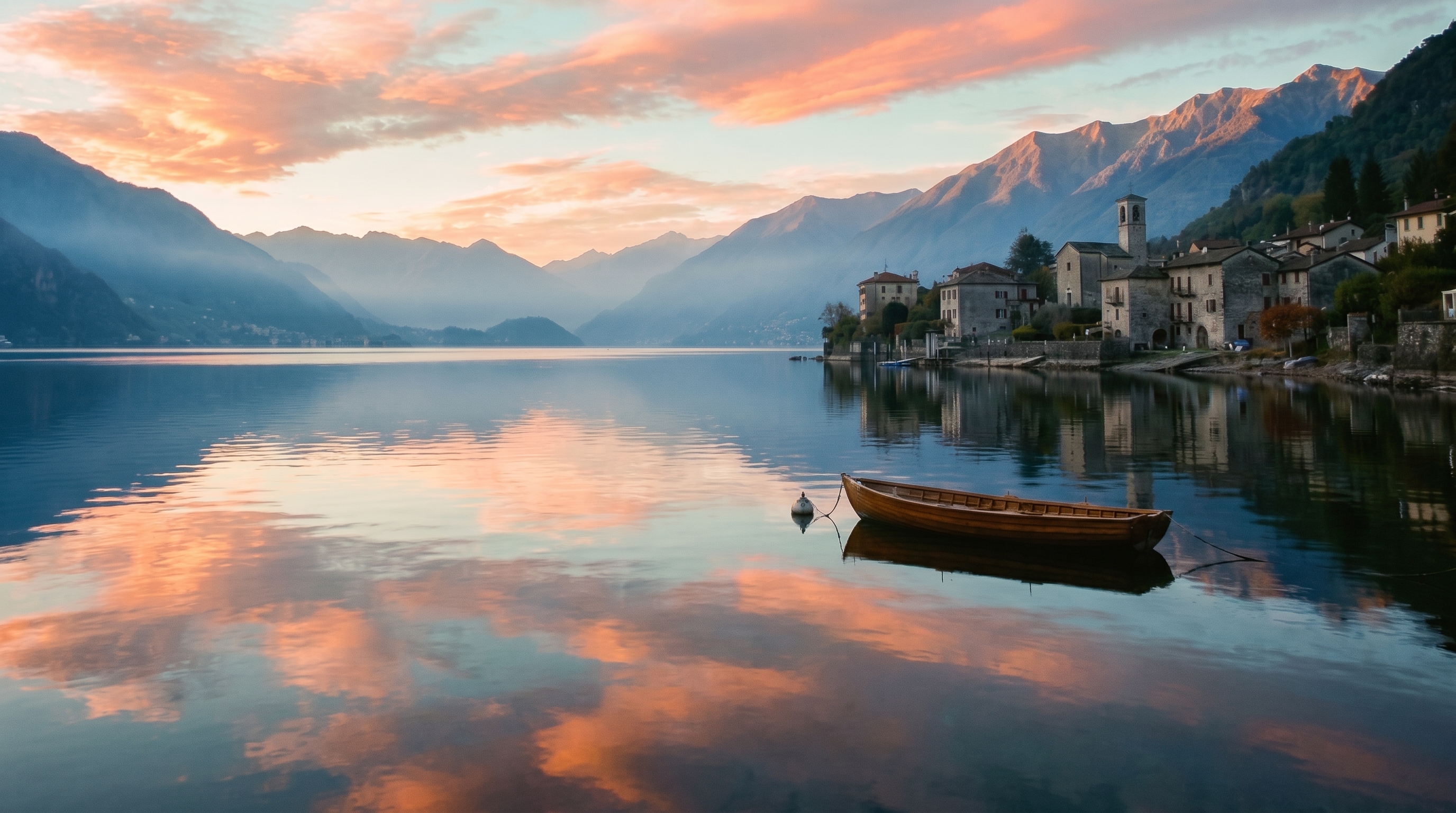
The village
UNESCO-listed since 1995: the best-preserved workers’ village in Europe, and still lived in.
Cristoforo Benigno Crespi built his cotton mill here and, around it, everything his workers needed: the terraced houses with their vegetable plots, the school, the church, the theatre, the wash house, the public baths, the hospital and the cemetery. At the end of the avenue, the owner’s castle; above it all, the chimney.
The village is a single design, and you read it by walking: the avenue of plane trees, the parallel streets of workers’ houses, the managers’ villas, the monumental cemetery with the Crespi mausoleum. The mill closed in 2003 and now houses the visitor centre; the houses are still lived in.
You walk around freely and it is free: these are public streets. At weekends the visitor centre runs guided tours that go inside the mill and the school: €10, and worth it.
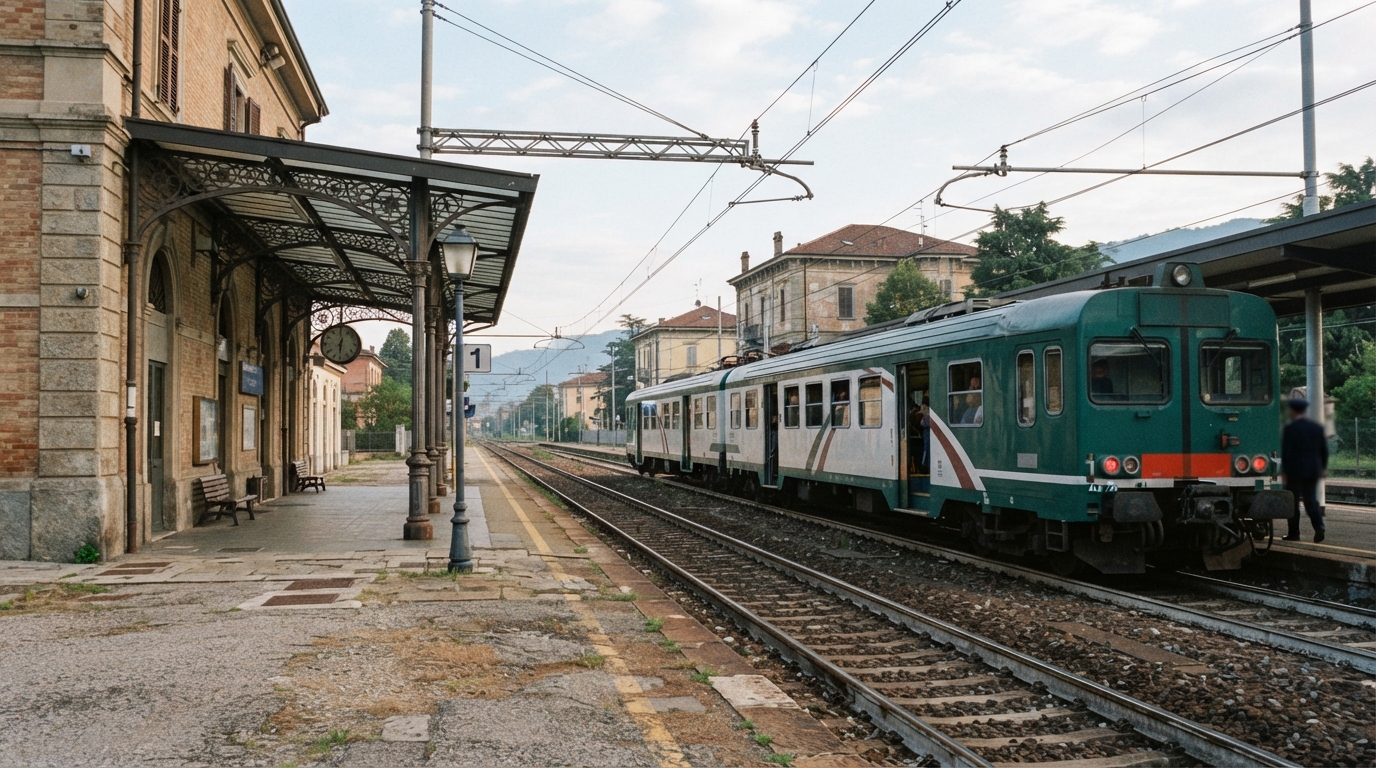
The walk
An hour and a half on foot, from the entrance down to the river.
- 0:00 · The forecourtThe visitor centreIn the mill’s old gatehouse: free map, the exhibition and bookings for the guided tours.
- 0:15 · The avenueChurch, school and theatreThe services side: the church, a copy of the one in Busto Arsizio, the school, the workers’ club. All by the same hand.
- 0:35 · The workers’ housesThe parallel streetsTerraced houses with a garden, one family per house, still lived in. Look from the street, and be respectful.
- 0:55 · The castle and the villasHierarchy in stoneThe managers’ villas, then the Crespi castle at the end, fake medieval and beautiful.
- 1:20 · The cemetery and the AddaThe end of the avenueThe pyramid mausoleum and, behind it, the river with its hydroelectric plant. A free path runs along the Adda.
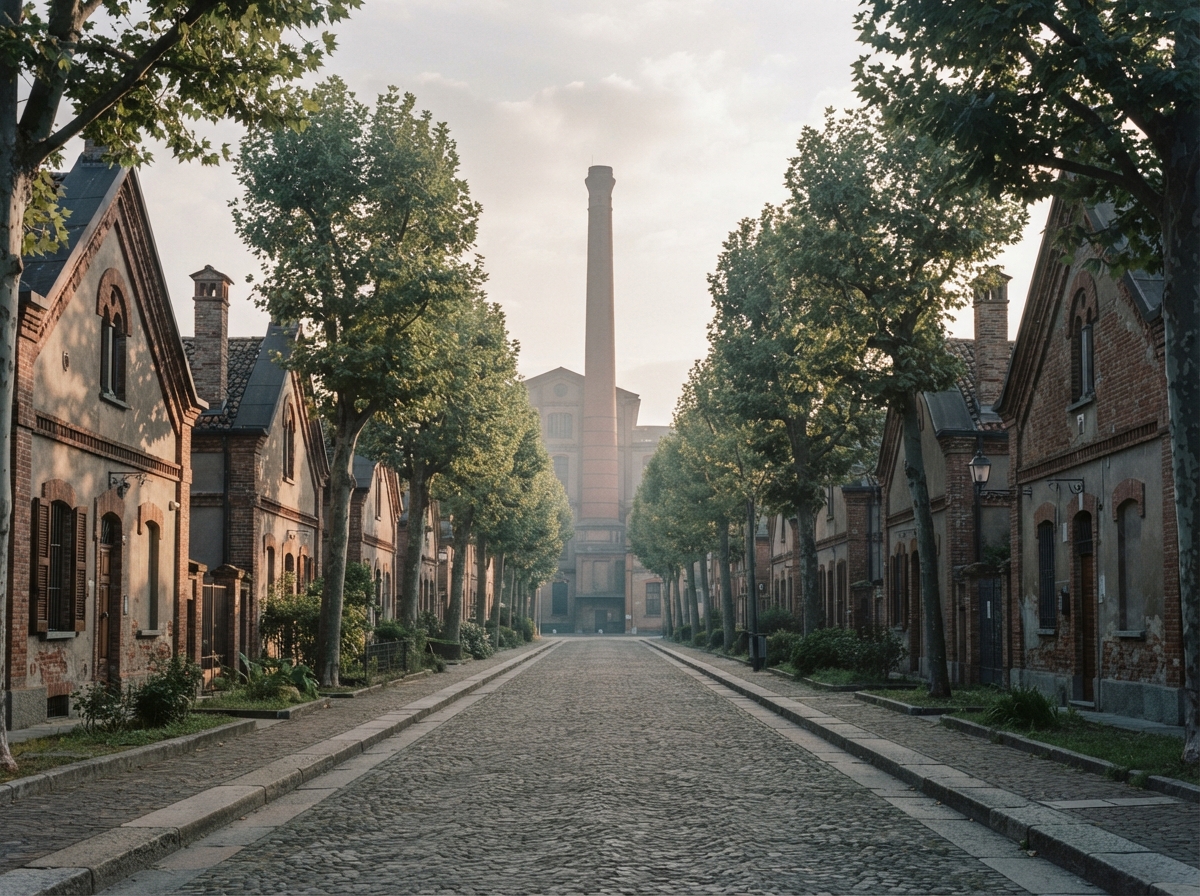
Getting there
Route on Google MapsCrespi has no station, but it is an hour from Milan and half an hour from Bergamo on public transport.
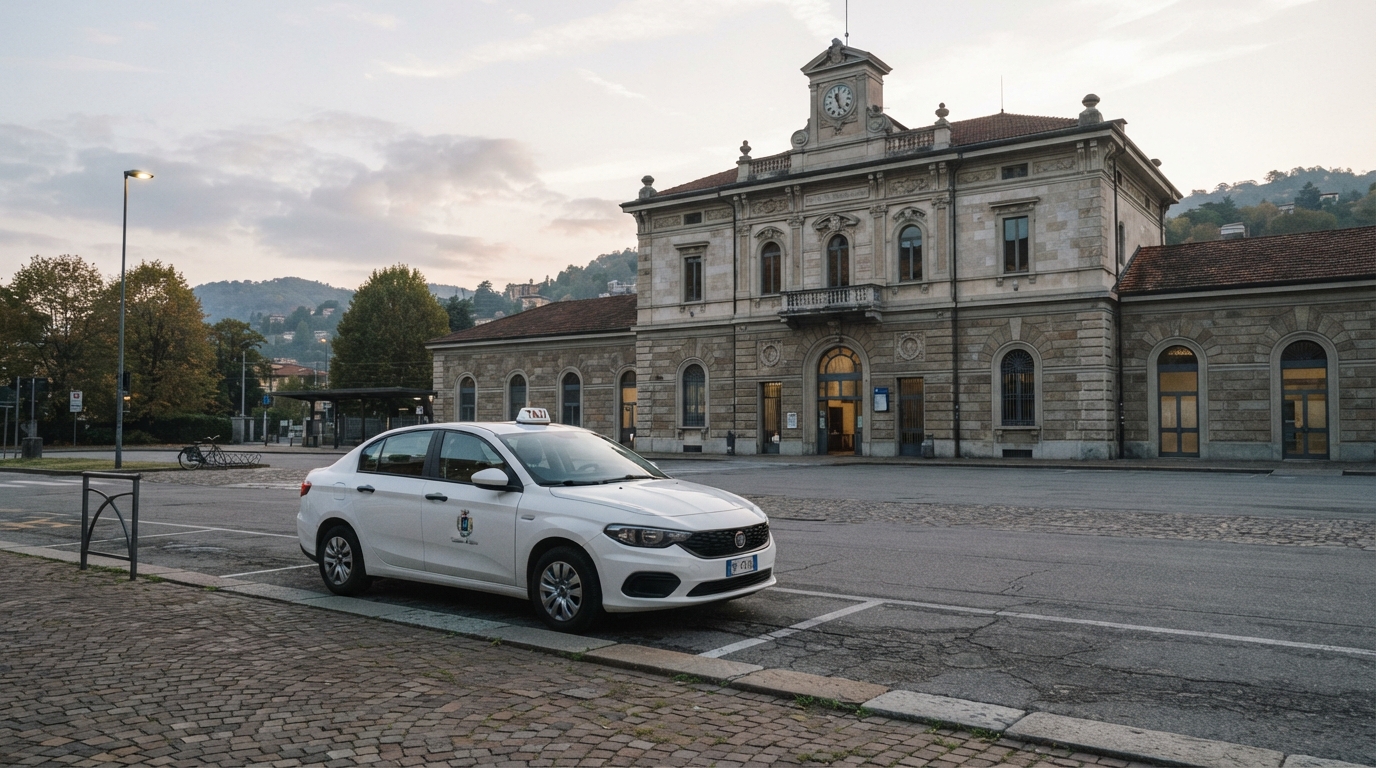
What to know before you go
Four things the people who live in Crespi take for granted.
It is not an open-air museum: people live here. Look from the street, do not walk into the gardens, do not photograph through the windows.
The cotton mill and the school can only be seen on the weekend guided tours. Book ahead: the groups are small.
The avenue is a kilometre long, completely flat, lined with plane trees. Drinking fountains at the forecourt and by the church.
There is a single bar in the village. For lunch, Capriate or Trezzo are 5 minutes away.
Around Crespi
The Adda between Bergamo and Milan: castles, Liberty-style power stations and the Città Alta.
Nearby, on Twip
The village is free. If you want to go inside the mill with a guide, cycle along the Adda or head up to the Città Alta with a local, you book those on Twip.
See all the experiences between the Adda and Bergamo on Twip
Frequently asked questions about Crespi d’Adda
The things people ask us before they leave.
Is there an entrance fee?
No: the village is a town with public streets. You only pay for the guided tour of the mill (€10), if you take it.
Is it open every day?
The village always. The visitor centre and the guided tours only at weekends and on public holidays, and you need to book.
Can you get there without a car?
Yes: from Milan take the M2 to Gessate and the Z301 bus; from Bergamo, the bus. Sunday timetables are reduced.
How long do you need?
An hour and a half for the walk; three hours with the guided tour.
With children?
Yes: all flat, no traffic, the river at the end. Fine with pushchairs.