The lace
Burano's punto in aria is made with a needle, a cushion and no frame. A few dozen women still know how.
The needle lace was born here in the sixteenth century and for two hundred years dressed the courts of Europe. The island's older lacemakers still work it: sitting on the doorstep, cushion on their knees, the tombolo and a needle, on mornings when there is light.
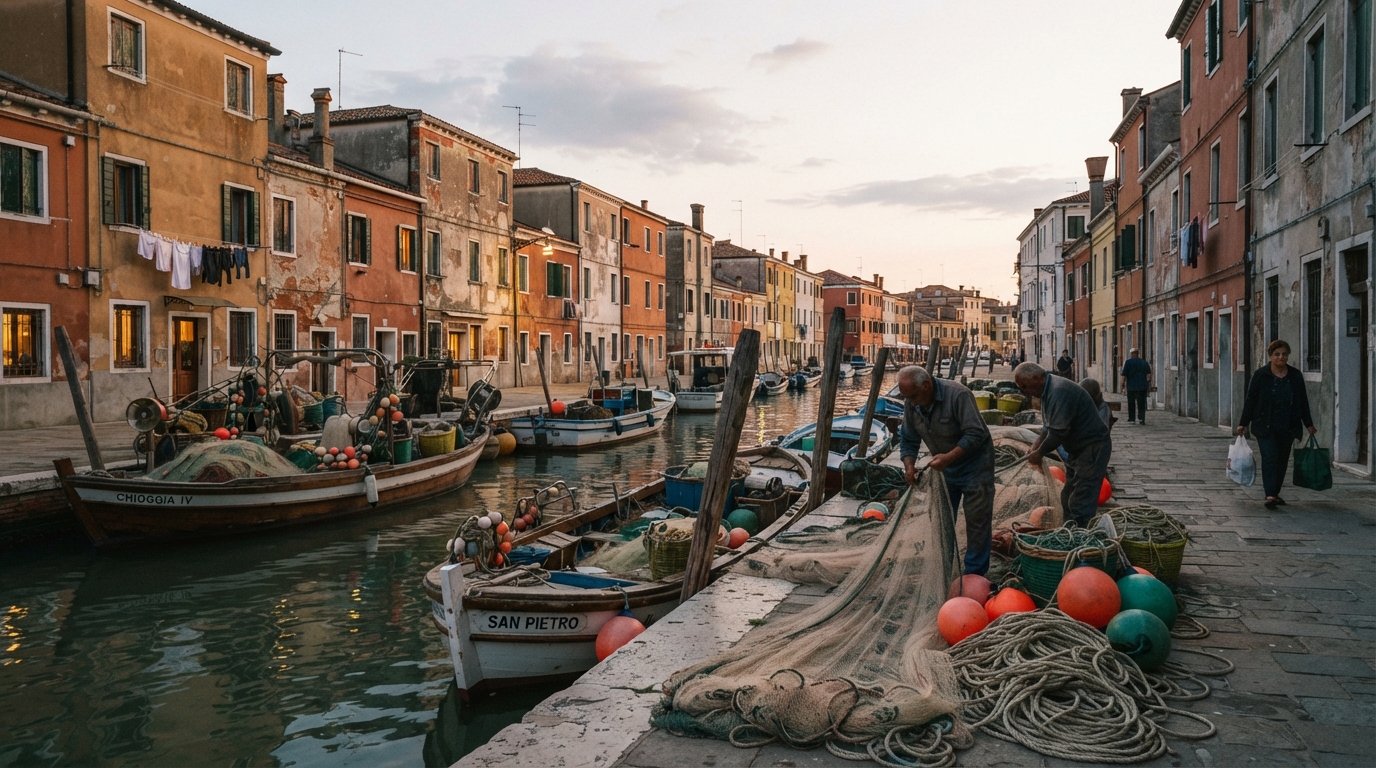
You find them in the back calli, away from the main shopping street: via Giudecca, the fondamente behind the square, the courtyards of San Mauro. You watch in silence, you say hello, and they often start talking. Some sell their work: a handmade doily takes weeks and costs what it should.
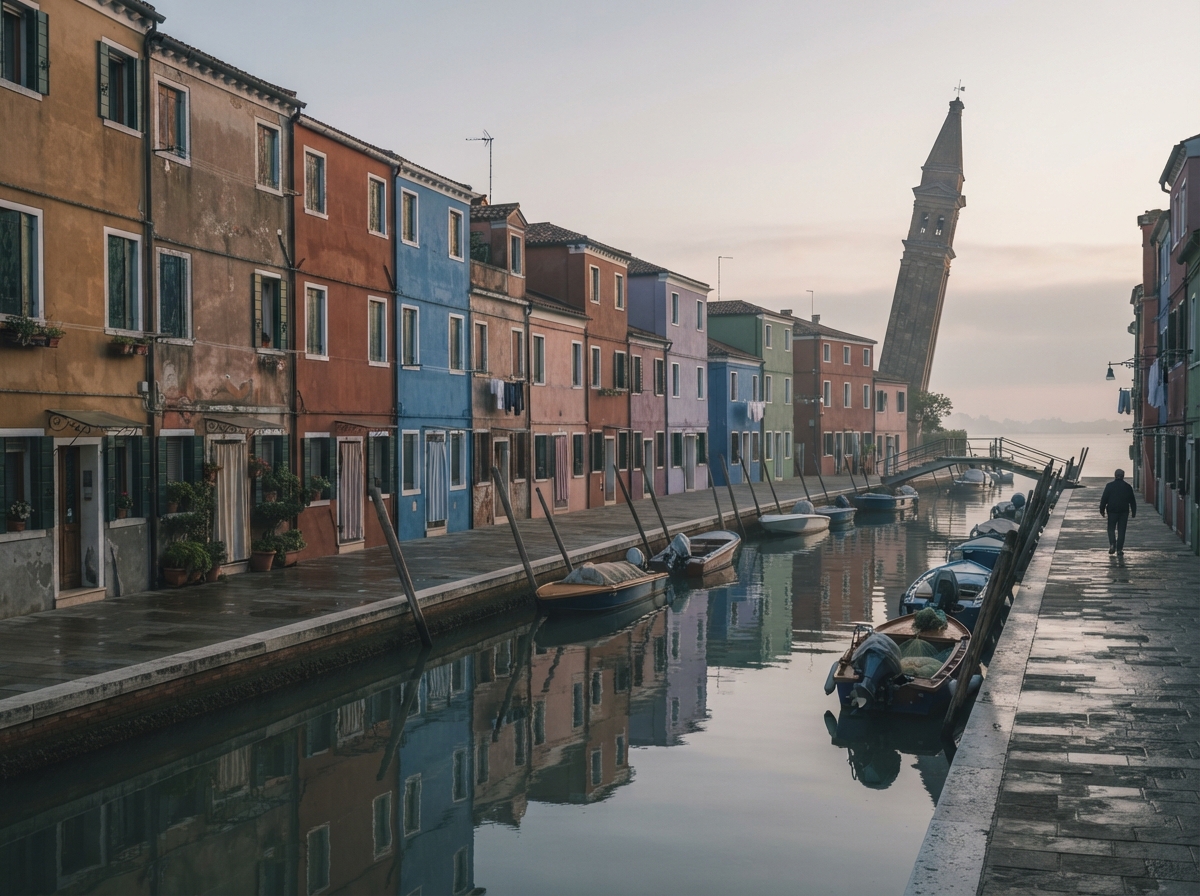
The Lace Museum, in the old Scuola on piazza Galuppi, shows the historic pieces and on weekday mornings has lacemakers working there: €5. The rest of the island, with its painted houses and leaning bell tower, is free.
The walk
A walking route around the island, from the lacemakers' calli to the bell tower, in a couple of hours.
- 0:00 · Burano stopOff the vaporettoFrom the stop you walk straight into via Giudecca: already here, on good mornings, the first lacemakers on their doorsteps.
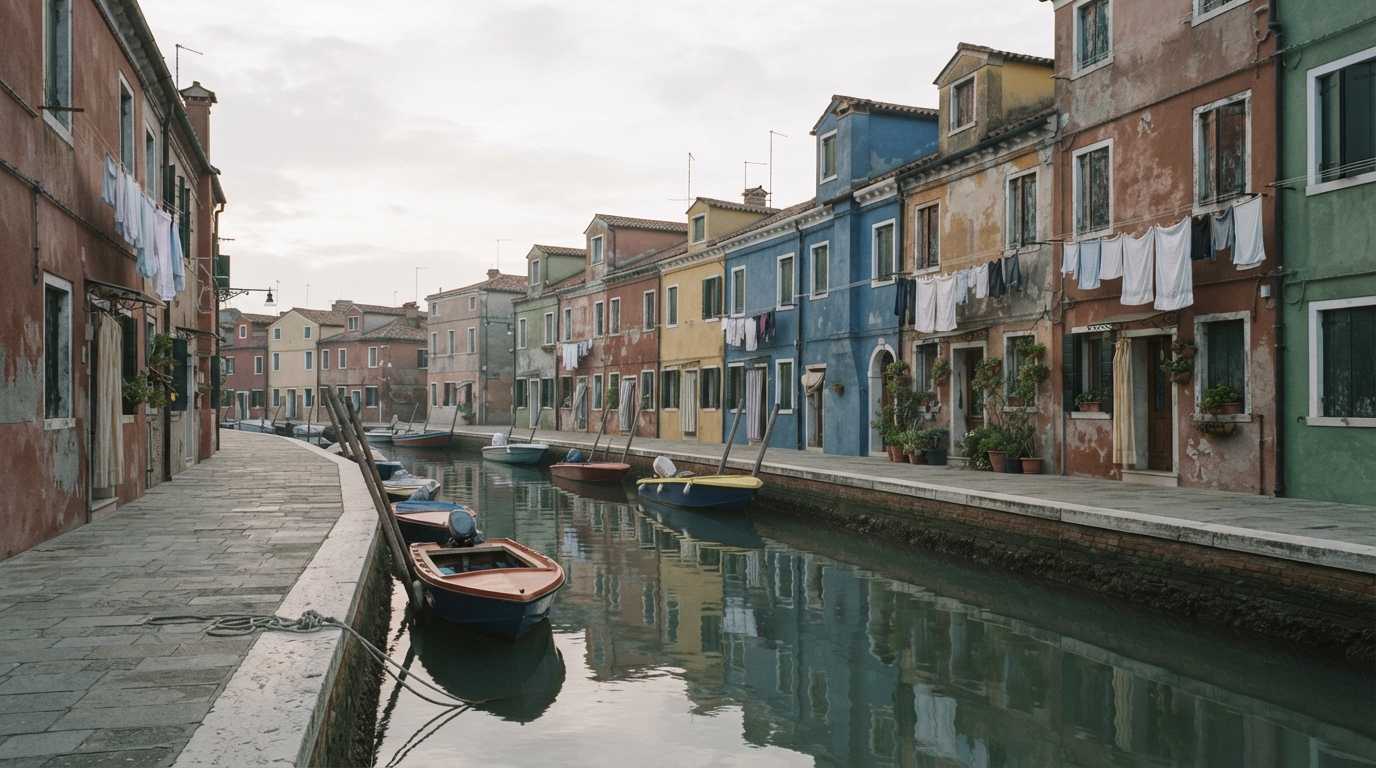
- 0:20 · The back calliAway from the shopsThe fondamente behind the main street: coloured houses without shop windows, washing hung out, women at work.
- 0:50 · Piazza GaluppiThe Lace MuseumIn the old lace school: pieces from the sixteenth century and lacemakers at work on weekday mornings. €5.
- 1:15 · San MartinoThe leaning bell towerThe church and its tilted bell tower, then the wooden bridge to Mazzorbo and the Venissa vineyard.
- 1:45 · BackA bussolà and the vaporettoThe Burano biscuit from the bakeries on the square, then line 12 towards Fondamente Nove or Torcello.
Getting there
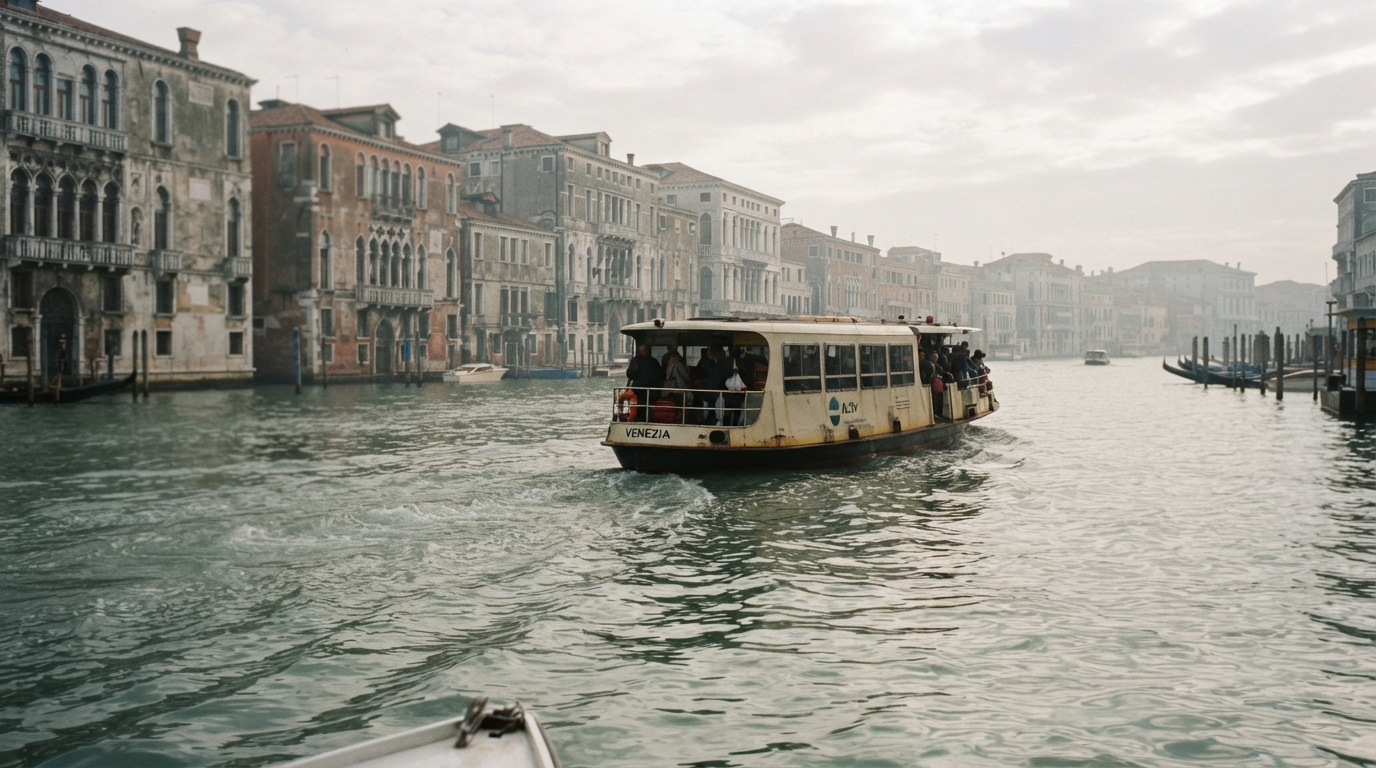
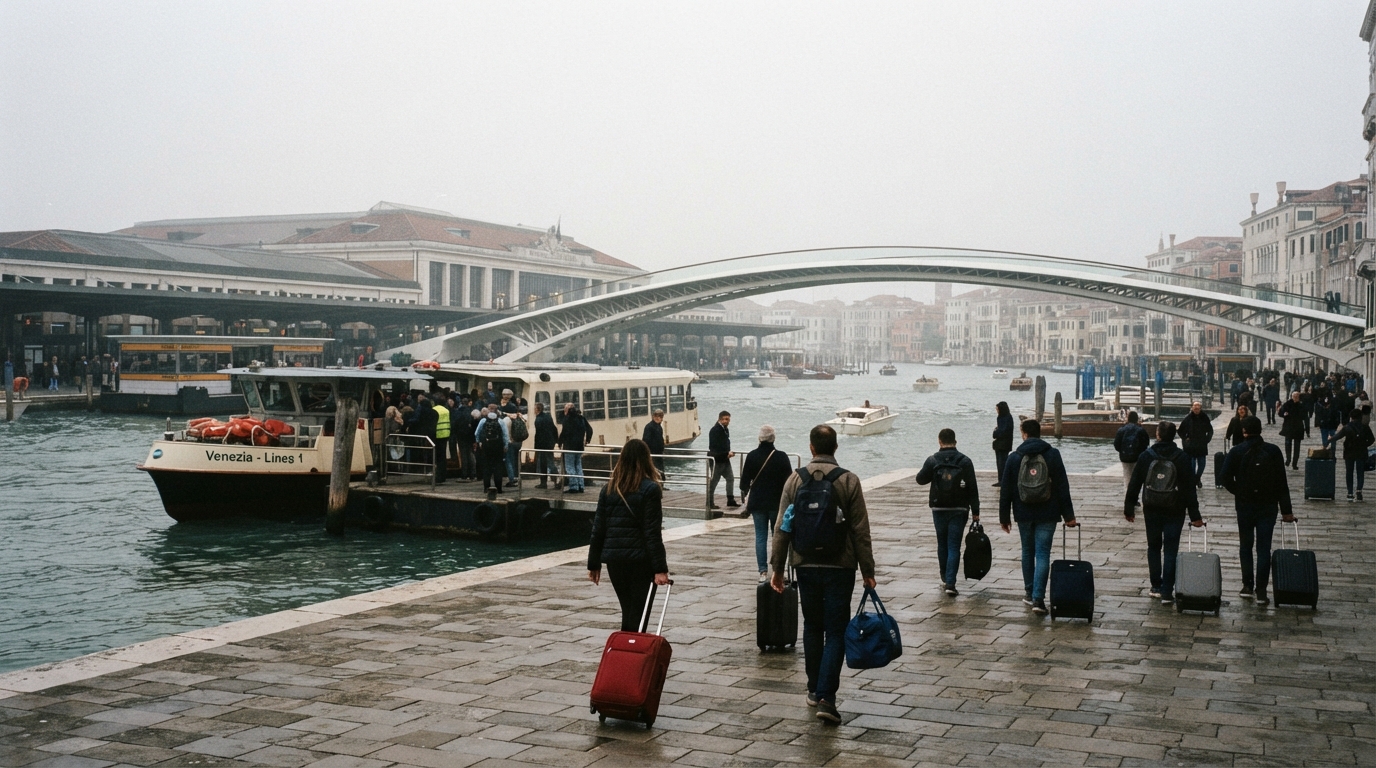
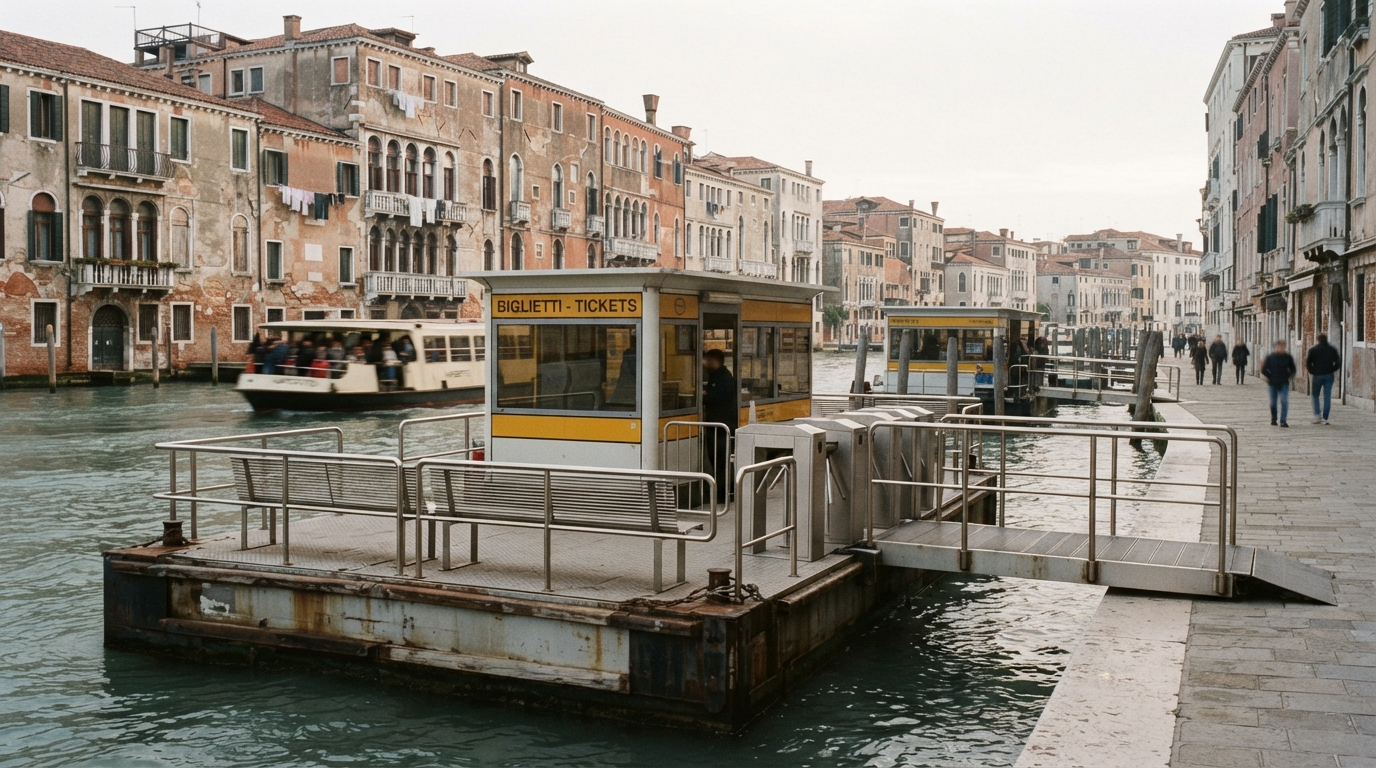
Route on Google MapsBurano is in the northern lagoon: you get there only by water, on the public vaporetto.
What to know before you go
Four things people who live in Burano take for granted.
The lacemakers work by natural light, from 9 to 12. In the afternoon the island belongs to the tourists and they are indoors.
They are at home. A smile and a “may I?”: almost always yes, and they often show you the work close up.
In the shops on the main street much of the lace is machine-made or imported. The handmade kind shows in the price and in the imperfections.
The women sell their own pieces on the doorstep; the museum bookshop has certified work. Bring cash for the former.
Around Burano
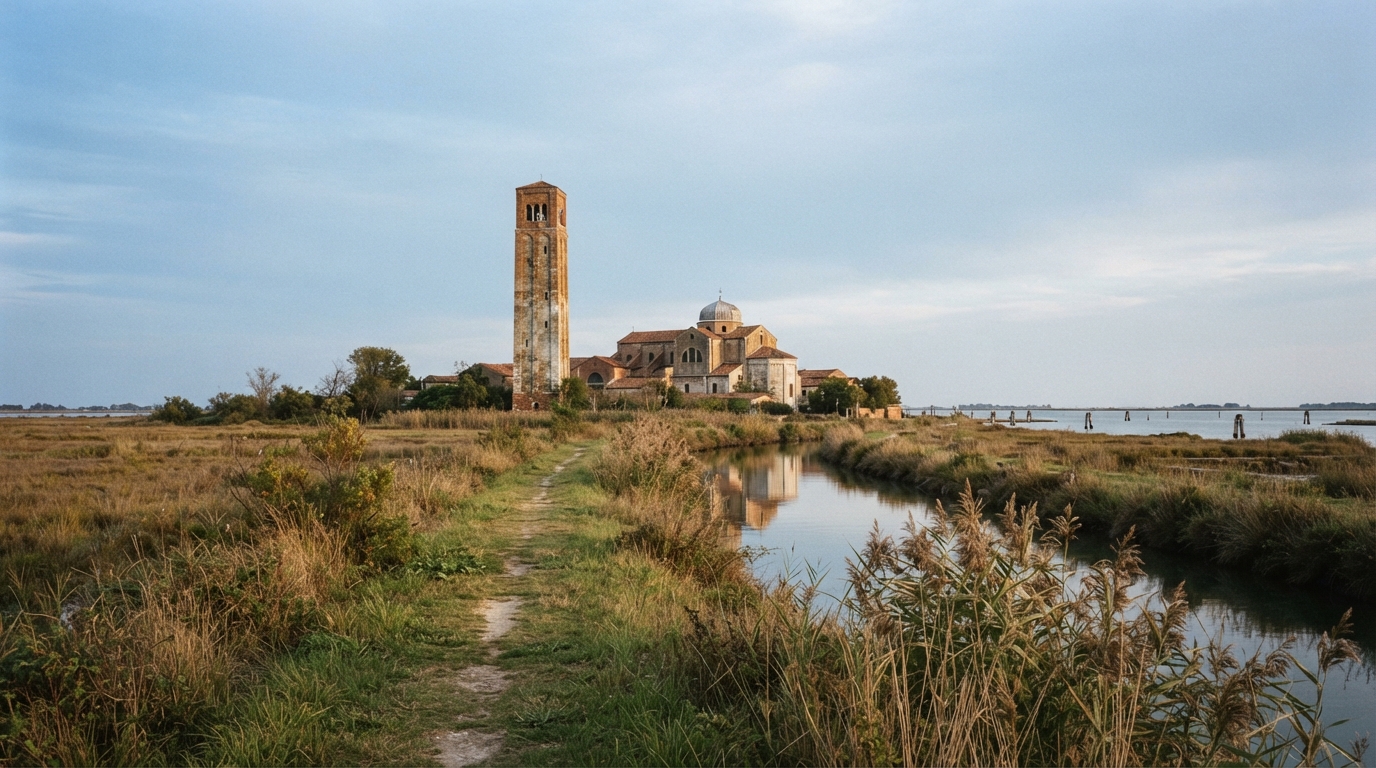
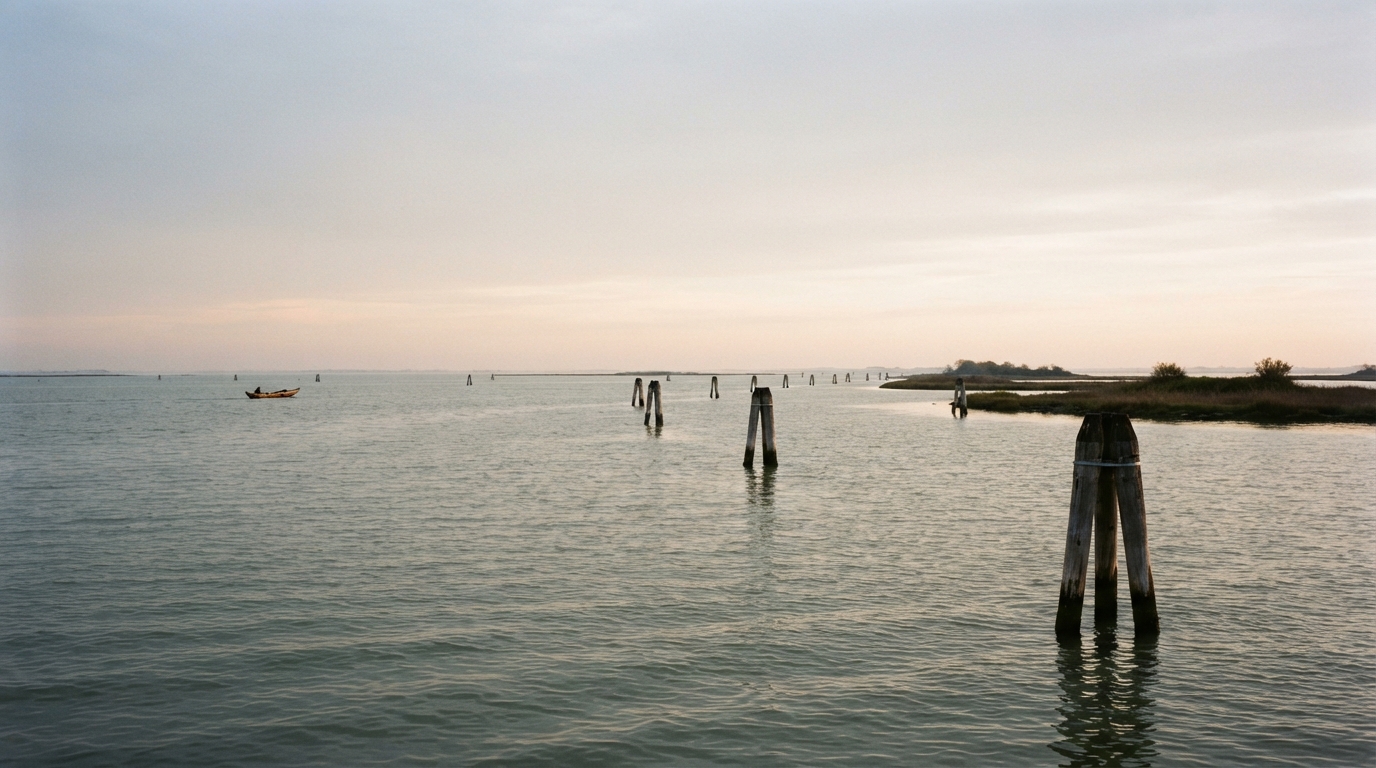
The northern lagoon: near-empty islands one vaporetto stop away.
Nearby, on Twip
Watching is free. If you want to learn the punto in aria, have lunch in a Burano home or tour the lagoon by boat, you book those on Twip.
Frequently asked questions about Burano
The things people ask us before they leave.
Do you pay to get onto the island?
No, Burano is a district of Venice: you pay only for the vaporetto and, if you want, the Lace Museum (€5).
Will I actually see the lacemakers?
On sunny mornings, in the back calli, almost always. In winter or in the rain they work indoors: then there is the museum, on weekdays.
How much does real lace cost?
A small doily runs from €30 to €80; a large piece, hundreds. They are weeks of work: if it costs €5, it isn't handmade.
How long do you need?
Two hours for the island; half a day with Torcello.
Where can I eat without spending too much?
In the bacari in the back calli, or with a bussolà from the bakery. The restaurants on the main street are for tourists.